
Last Updated: November 25, 2026
Quick Summary
Online school options for social anxiety include self-paced K-12 programs, schools with no live classes, start-anytime enrollment, accredited online high schools, homeschool with an online curriculum, district or charter virtual programs, and blended or hybrid options. Match the format to your student's anxiety severity, learning needs, independence, and need for live support.
- Self-paced K-12 suits self-motivated students who need to control pace but requires self-discipline.
- A school with no live classes removes the camera entirely, though it offers less real-time feedback.
- Start-anytime enrollment lets students begin mid-year instead of waiting for a new semester.
- Verify a school's accrediting body independently through the body's own directory before enrolling.
- Online school is an educational placement, not a treatment, so coordinate with a licensed mental health professional.
Why Online School Can Reduce Social Anxiety for High School Students
For a teenager with social anxiety, the school day can feel like a marathon of small terrors.
At Resolute Academy, we hear the same story from families again and again: a bright kid who does fine academically but falls apart in a building full of people. Online learning doesn’t cure anxiety.
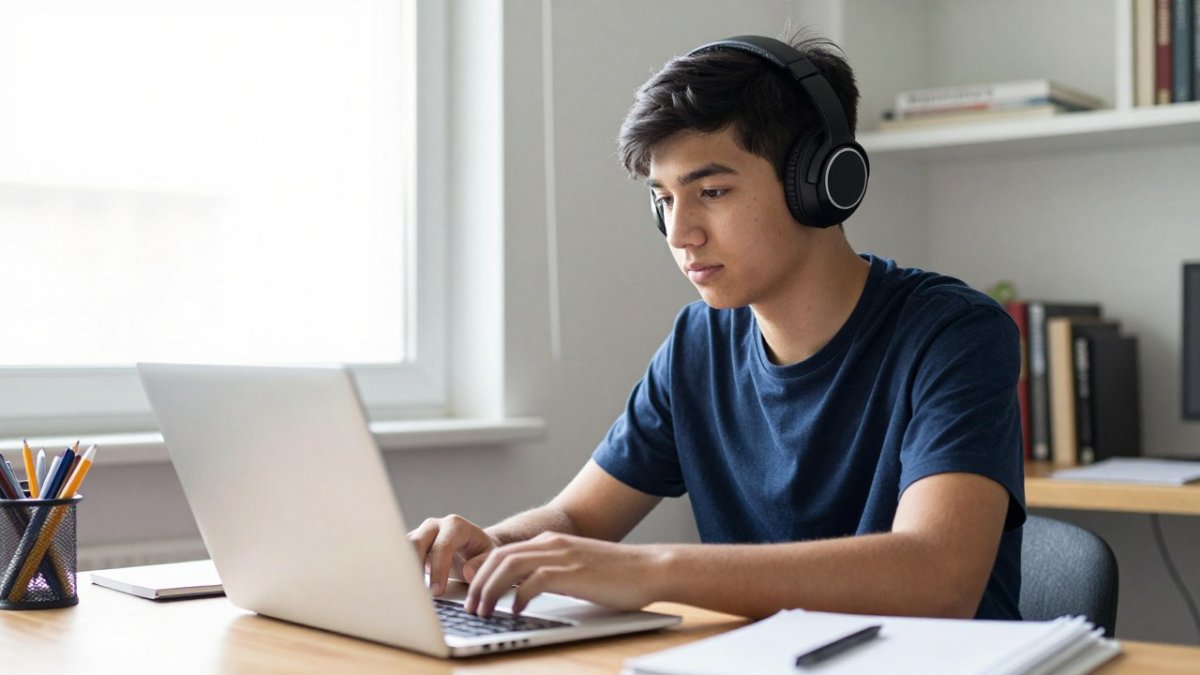
How school anxiety and social anxiety show up in the classroom
The signs are easy to miss. A student who goes quiet in group work. Someone who asks to use the bathroom every time a presentation is announced.
Social anxiety is more than shyness. It’s an intense fear of being watched or judged, and school puts that fear on display all day (Social Anxiety Disorder: What You Need to Know). Many students with these struggles aren’t behind academically at all.
What a low-stress learning environment actually changes
Removing the crowd changes the math. A safe learning environment means a student can make a mistake without an audience, ask a question without raising a hand in front of thirty people, and take a test without watching everyone else finish first.
A low-stress environment doesn’t lower standards. It removes the noise drowning out the student’s actual ability.
The 7 Online School Options to Compare for Anxious Students
Here’s the honest truth most guides skip: "online school" is not one thing. The seven options below cover the main formats families should weigh, from fully self-paced programs to live-class models and district alternatives.
- Self-paced K-12 online school with no fixed class times
- Online school with no live classes (recorded or text-based instruction)
- Start-anytime enrollment programs you can begin mid-year
- Accredited online high schools built for anxiety and credit recovery
- Homeschool with an online curriculum you oversee yourself
- District or charter virtual programs tied to public school enrollment
- Blended or hybrid options combining online work with limited in-person time
Each one fits a different student. The mistake is picking the cheapest or most famous name before you know which format matches your teen’s actual needs.
How to weigh each option side by side
Use this table as a starting point, then dig into the details that matter for your student. The columns surface the questions families forget to ask until after enrollment.
| Option | Live Classes | Start Timing | Eligibility and Funding | Diploma and Credit Notes | Best For | Main Trade-Off |
|---|---|---|---|---|---|---|
| Self-paced K-12 | No | Flexible | Usually private enrollment; tuition varies by provider | Confirm regional accreditation before enrolling | Students who need to control pace | Requires self-discipline |
| No live classes | No | Varies | Often private; some district programs offer this format | Ask how credits transfer to a traditional high school | Teens who freeze on camera | Less real-time feedback |
| Start anytime | Varies | Any time | Private programs most common; public options may have term limits | Prior credits need a transcript review | Mid-year transitions | Records and credits need review |
| Accredited high school | Varies | Varies | Private tuition; some offer payment plans | Verify the accrediting body independently | Diploma-focused students | Verify accreditation first |
| Homeschool + curriculum | No | Flexible | Parent files as homeschooler under state rules | Parent maintains records; colleges may ask for syllabi | Families who want full control | Parent handles records |
| District virtual program | Often yes | Term-based | Usually free to in-district residents; out-of-district rules vary | Diploma issued by the district or charter | Families wanting public-school ties | Fixed calendar, larger classes |
| Blended/hybrid | Some | Term-based | Often tied to district or charter enrollment | Confirm which school awards the diploma | Gradual re-entry | Still involves a building |
Eligibility, cost, and funding questions to ask first
Cost is where families get surprised. Public district and charter virtual programs are often free to eligible residents, but enrollment boundaries are strict. Private online schools charge tuition that varies by provider and course load, so ask each school directly about its costs and any payment options.
Watch out: a program that advertises "free" may apply fees to part-time enrollment, summer courses, or materials. Get the total cost in writing before you commit.
Accreditation and credit-transfer checks
Accreditation is the question every parent should ask first. A diploma from an accredited school is the one colleges, employers, and the military recognize. Ask for the accrediting body’s name and verify it independently through the body’s own directory rather than a logo on the school’s website. Families can learn what accreditation means for diplomas and college acceptance before committing.
Teacher access and live support by format
Live-class models give students scheduled contact with a teacher and classmates, which helps teens who need external structure. Self-paced and no-live-class models can still include teacher access through messaging and feedback, ask how quickly responses come and whether help is available during the hours your student actually works. Anxious students often do best with at least one predictable adult touchpoint each week, even in a self-paced program.
Self-Paced Online School K-12: Who It Fits and Who It Doesn’t
Self-paced online school K-12 lets a student move through coursework at their own speed, faster in strong subjects and slower where they need more time. For an anxious teen, that flexibility is the whole point.
It fits students who are self-motivated, who learn well from reading and video, and who need to catch up without feeling watched.
Online School No Live Classes: A Better Match for Some Anxious Teens
An online school with no live classes removes the camera entirely. With the pressure of video calls removed, a teen can focus on learning while considering whether therapy for anxiety might help with the feelings that make live interaction difficult.
The trade-off is real. No live classes means fewer spontaneous questions and less real-time discussion. Some students thrive with that independence. Others drift without a scheduled touchpoint.
Online School Start Anytime: Why Enrollment Timing Matters
Online school start anytime enrollment means a student doesn’t have to wait for a semester to turn around a bad year. That matters for teens who fell behind, burned out, or dropped out and now want back in.
Timing flexibility also reduces the pressure that builds before a traditional start date. A student can begin when they feel ready, not when a calendar says so.
Online High School for Anxiety: Accreditation, Support, and Fit
An online high school for anxiety should be judged on three things: whether the diploma is real, whether help is actually available, and whether the pace fits your student. Skip any program that can’t answer all three clearly.
Accreditation and diploma recognition
Accreditation is the question every parent should ask first. A diploma from an accredited school is generally the kind colleges and employers look for. Without it, a transcript can create problems down the road. Families weighing options can learn what accreditation means for diplomas and college acceptance before committing. Ask for the accrediting body’s name and verify it independently.
Teacher access, counseling, and gradual re-entry
Support is where anxious students succeed or stall. Ask how quickly students get help when they’re stuck, and whether they work with a real teacher rather than only a video library and worksheets.
For teens who want to rebuild social confidence, a gradual re-entry plan helps: low-pressure online clubs, then small group sessions, then a part-time in-person class. The goal isn’t isolation forever.
How to Tell If an Online School Is the Right Fit for Your Student
Fit comes down to a few honest questions. A student with mild social anxiety who needs a quieter setting is a different case from a teen whose anxiety is severe enough to interfere with eating, sleeping, or leaving the house. Use the questions below as a starting framework, then match the answers to the format that fits.
A fit framework: anxiety severity, learning needs, independence, and live support
- Anxiety severity. Is the anxiety tied mainly to the school building and peer audience, or does it show up across most areas of life? If it is broad and persistent, schooling alone will not solve it, and a clinical assessment should come first.
- Learning needs. Does your teen need reteaching, extended time, or a specialized reading or math program? Ask whether the online program provides those services and how they are delivered remotely.
- Independence. Can your student start work without a parent prompting every assignment? Self-paced formats reward independence and punish its absence.
- Need for live support. Does your teen do better with a scheduled class and a teacher who notices absences, or does a live camera trigger shutdown? Match the format to the answer, not to a marketing page.
If several of these point toward online learning, take a quick self-check with our signs online school is right for you guide.
Educational accommodations versus clinical treatment
Online school is an educational placement, not a treatment for social anxiety. A school can provide accommodations such as flexible pacing, reduced live participation, or extra time, but it does not diagnose or treat anxiety. If your teen’s anxiety is significant, coordinate with a licensed mental health professional, a pediatrician, psychologist, or licensed counselor, and ask the school how it communicates with outside providers. It is also worth reading how online learning supports student mental health and talking with a counselor before making a change.
Keeping social connection and planning gradual re-entry
Isolation is not the goal. A good online plan includes deliberate social contact, even for students not ready for a full return to a building.
Watch out: a student who withdraws from all peer contact after enrolling online may be avoiding rather than recovering. If social contact keeps shrinking, raise it with your teen’s counselor and adjust the plan.
Enroll With a School Built for Students Who Need a Different Path
Finding the right online school options for social anxiety comes down to matching the format to your student, not chasing the biggest name. You can earn a real accredited high school diploma online on your own schedule, and our FAQ answers the practical questions families ask before enrolling.
If your teen has been surviving school instead of learning in it, that’s a signal worth acting on. Resolute Academy offers self-paced courses, uninterrupted access to lessons, and a path to a recognized diploma designed around your student’s goals.
Frequently Asked Questions
Should I do online school if I have anxiety?
Online school can be a strong option if traditional classroom pressure makes it hard to focus or attend regularly. A flexible online school removes crowded hallways, large-group speaking, and rigid schedules, which can lower daily stress. It works best when the program includes real teacher support and a plan for staying connected to friends and activities. Talk with your parents and a counselor about whether the change supports your goals, and start with a trial period if the school offers one.
Can online school help with social anxiety?
It can reduce the school-based triggers that make social anxiety worse, such as public speaking in front of large classes or eating in a crowded cafeteria. Learning from home gives students a safer, lower-stress environment to build academic confidence first. That said, online school is not a treatment by itself. Pairing it with counseling and a gradual plan for social interaction, like a club or part-time job, gives students the best chance to grow both academically and socially.
Are there online schools with no live classes?
Yes. Some online high school programs use recorded lessons and written assignments with no required live class times, which suits students who find real-time group participation stressful. Look for schools that still provide one-to-one instruction or scheduled teacher check-ins so students are not left alone when they get stuck. Ask specifically how teacher support works, how quickly staff respond, and whether any live sessions are optional rather than required.
How can parents help a teen with social anxiety succeed in online school?
Set a predictable daily routine, keep a quiet workspace, and check in weekly on coursework and mood. Ask the school how progress is tracked and who to contact when your teen falls behind. Encourage small social steps outside of class, such as a hobby group or volunteer shift, so isolation does not replace anxiety. If your teen already sees a counselor, keep those appointments and share the school schedule so support stays coordinated.
