
Last Updated: November 11, 2026
Quick Summary
Online school is right for you if you can manage your own time, start assignments without reminders, and want control over when you study. A self-assessment score of 18 or higher suggests you’re a strong fit, while below 12 means you should examine your support system before enrolling.
- Score each self-assessment statement from 1 to 5, with 18 or higher signaling a strong fit.
- Online school offers flexible, self-paced schedules but demands discipline and deliberate social effort.
- Build a weekly calendar with fixed study blocks and review your gradebook every week.
- Verify a school’s accrediting body through the U.S. Department of Education’s accreditation database before enrolling.
- Students with ADHD or anxiety often thrive online with fewer sensory distractions and a schedule they shape.
Table of Contents
- A Quick Self-Assessment: Is Online School Right for Me?
- The Pros and Cons of Online High School
- Self-Paced Learning vs Traditional Classroom: Which Fits You?
- The Hidden Challenges: Social Isolation, Burnout, and Executive Function
- How to Succeed in Online High School
- What Colleges and Employers Actually Think of Online Diplomas
- Choosing an Accredited Online School: What to Look For
- Ready to Decide? Your Next Step
- Frequently Asked Questions
A Quick Self-Assessment: Is Online School Right for Me?
Deciding is online school right for me comes down to one honest question: do you work better with structure you build yourself or structure someone builds for you? Online school is a fully accredited, self-paced education delivered through a learning management system, and it rewards students who can manage their own time.
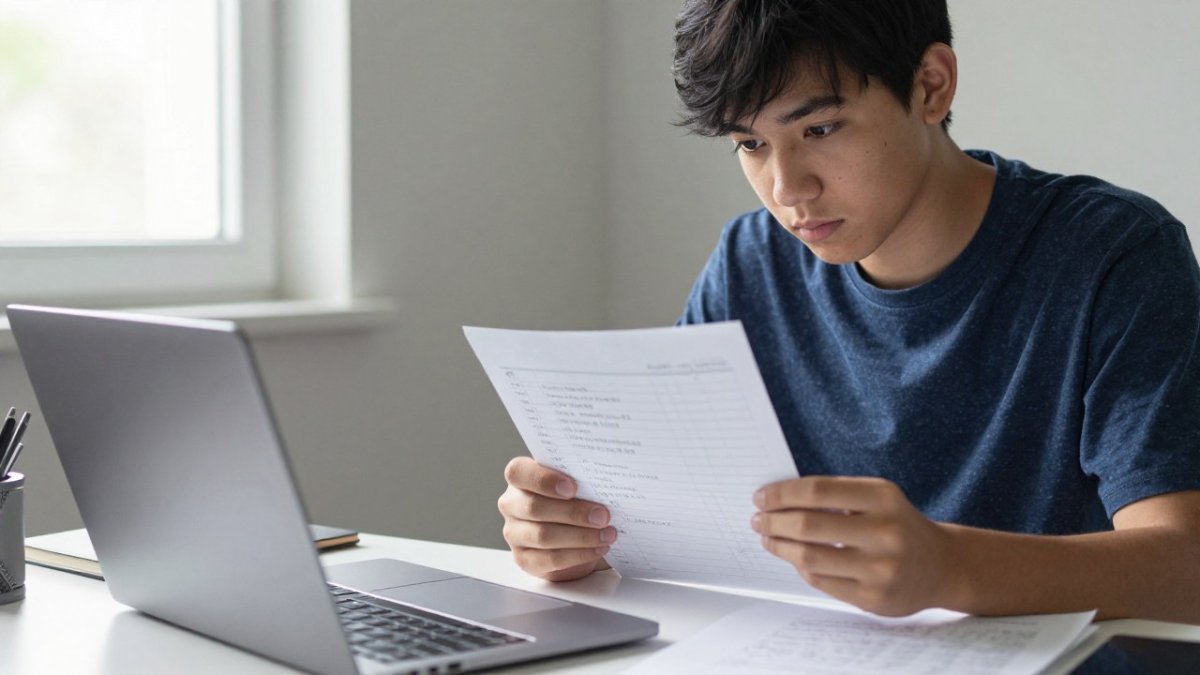
Before you read another word, run this quick check. Score each statement from 1 (not like me) to 5 (very like me):
- I can start assignments without someone telling me to
- I recover quickly when I fall behind
- I’m comfortable asking for help by email or message
- I have a quiet place to work most days
- I want more control over when I study
A total of 18 or higher suggests you’re a strong fit. Below 12, look closely at the support system around you before enrolling.
The 7 Signs You’ll Thrive Online
- You finish things without a deadline hanging over you
- You want to move faster in subjects you love and slower in ones you don’t
- A traditional bell schedule drains more energy than it gives
- You have a reliable internet connection and basic digital literacy
- You’re self-motivated enough to log in on a Tuesday when nobody’s checking
- You have at least one adult who can serve as a support system
- You’re chasing a specific goal, like dual credit or credit recovery
The Pros and Cons of Online High School
The pros and cons of online high school come down to freedom versus friction. The schedule flexibility is real, and so is the discipline it demands. A common mistake is enrolling for the freedom and discovering you needed the structure more than you thought.
| Factor | Online School | Traditional Classroom |
|---|---|---|
| Schedule | Self-paced, flexible | Fixed bell schedule |
| Teacher access | Scheduled plus messaging | In-person, same day |
| Social contact | Requires deliberate effort | Built into the day |
| Pacing | Student autonomy | Class-wide |
| Environment | Home-based learning | Campus |
The upside is genuine academic flexibility: you can work, help at home, or recover credits without falling further behind. The downside is that social isolation and self-discipline become your responsibility, not the school’s.
Self-Paced Learning vs Traditional Classroom: Which Fits You?
Self-paced learning vs traditional classroom is really a question about executive function, but the practical difference is easier to see in how each model handles pacing, feedback, and accountability. A traditional classroom outsources time management to the school day: bells, due dates, and a teacher who notices when you drift. Self-paced learning hands that back to you, which is liberating for organized students and disorienting for others.
Here is how the two models actually differ in day-to-day operation:
- Pacing. In a traditional classroom, the whole class moves at one speed, so a student who grasps the material quickly waits, and a student who needs more time falls behind. In a self-paced program, you can move faster in subjects you love and slower in ones you don’t, but the pace only exists if you build it.
- Feedback loops. Traditional teachers give same-day, in-person feedback. Online feedback typically arrives through a learning management system, so it is written, asynchronous, and easier to reference later.
- Accountability. A traditional classroom provides external accountability by default. Self-paced learning requires you to create it, usually through a weekly calendar, a gradebook review, and at least one adult who checks in.
- Environment. A campus removes home distractions but adds commute time and social pressure. A home workspace removes the commute but adds the refrigerator, the phone, and the family schedule.
If you need external deadlines to function, a blended learning setup or a brick-and-mortar school may serve you better. If you’ve ever finished a semester’s work in three weeks because the material finally clicked, self-paced curriculum is probably your match.
A useful way to test fit before enrolling is to run a two-week trial on your own. Pick one subject, set a fixed study block, and track whether you actually show up without someone reminding you.
Watch out: the most common failure pattern is enrolling for the flexibility and then discovering you needed the structure more than you thought. Before you commit, ask the school how progress is monitored, how often instructors check in, and what happens when a student goes quiet for a week.
The Hidden Challenges: Social Isolation, Burnout, and Executive Function
The challenges nobody warns you about are the quiet ones, and most guides stop at naming them. The useful version explains how each one actually develops and what to do before it compounds.
Social isolation creeps in when peer interaction drops to zero and you don’t replace it deliberately. Online school removes the hallway, the lunch table, and the group project by default, so social contact becomes something you schedule rather than something that happens. A common pattern is a student who feels fine for the first month and then notices that the only people they talk to are family members. The fix is not complicated but it has to be intentional: one recurring extracurricular activity, one club or team, and one standing call with friends each week.
Burnout arrives when self-paced becomes no-paced and you grind without breaks. Because online coursework is always available, there is no natural end to the school day, and students who treat every free hour as study time can run themselves down without noticing. Warning signs include dreading the login, working longer for the same output, and skipping breaks to “catch up.” The countermeasure is structural: fixed study blocks with a hard stop, a real lunch away from the desk, and at least one day a week with no coursework. Mental health deserves the same planning you give coursework.
Executive function struggles show up as a pile of started-but-unfinished coursework. The mechanism is simple: self-paced programs require you to initiate, plan, and monitor your own work, and those are exactly the skills that lag for many students, especially those with ADHD, anxiety, or autism. That does not mean online school is wrong for neurodivergent learners. In fact, many students with ADHD or anxiety thrive in a controlled environment with fewer sensory distractions and a schedule they can shape.
Watch out: students who treat “self-paced” as “no schedule” are the ones most likely to fall behind. Build a weekly calendar with fixed study blocks, protect one social outlet, and review your gradebook every week so a slipping class gets caught early rather than at the end of the term.
How to Succeed in Online High School
Success in online high school comes from three habits: a fixed weekly routine, a distraction-free workspace, and a habit of asking for help early. Students who treat remote education like a job with set hours consistently outperform those who study whenever the mood strikes.
Here’s a routine that works:
- Block 3 to 4 hours of coursework per weekday, same time each day
- Check messages and feedback from instructors every morning
- Submit something every day, even a small piece
- Review your gradebook weekly and flag anything slipping
- Schedule one social activity per week outside the house
Technical proficiency matters too. Learn your learning management system early, keep backups of your work, and test your connection before proctored exams. If you’re coming from a brick-and-mortar school, expect the first two weeks to feel strange. That’s normal.
What Colleges and Employers Actually Think of Online Diplomas
Colleges and employers care far more about accreditation than the word “online.” A diploma from an accredited online private school carries the same weight as one from a traditional school, provided the institution meets recognized standards. Regional accreditors and bodies like the Council for Higher Education Accreditation maintain the directories you can check before enrolling.
What most guides miss is that admissions officers and hiring managers look at the transcript, the coursework, and the rigor, not the delivery method. A student who completed dual credit and earned an Associate of Arts degree alongside a diploma stands out regardless of where the classes happened. The real risk is a diploma from an unaccredited program, which can cost you financial aid eligibility and college acceptance.
Choosing an Accredited Online School: What to Look For
Accreditation is the first filter, and it’s the one that protects you. Before you compare anything else, verify the school’s accrediting body through the U.S. Department of Education’s accreditation database. An unaccredited diploma is a piece of paper, not an education.
Then check these:
- Graduation requirements match state standards
- Instructors are reachable and credentialed
- Credit recovery and summer school options exist
- Dual credit pathways are available
- Course access is uninterrupted, not time-locked
- Hidden costs are disclosed upfront, not discovered later
Ask about total cost, including fees beyond tuition. The financial hidden costs of online school can be where budgets quietly break. Get every fee in writing before you commit.
Ready to Decide? Your Next Step
You now have the framework. Run the self-assessment, weigh the pros and cons honestly, and check accreditation before anything else. If the signs point toward online school, the next step is choosing a program that fits how you actually learn.
That’s where Resolute Academy comes in. As an accredited online private school, we offer self-paced learning with no STAAR testing required, a dual credit program that earns both a high school diploma and an Associate of Arts degree, and credit recovery and summer school options built around individual goals. Students have uninterrupted course access and progress at their own pace.
Get started with Resolute Academy and earn a recognized diploma on your own terms.
The decision is yours to make, and you’re better equipped for it than you were ten minutes ago. If you’re ready to stop guessing and start moving, our team is here to help you map out a plan that fits your life.
Frequently Asked Questions
Is going online for school a good idea?
It depends on your habits and goals. Online school works well for students who manage time independently, have reliable internet, and want flexibility for work, health, or family reasons. It is a poor fit for students who need constant in-person prompting or daily social contact to stay engaged. Look for an accredited program with real teacher support, and try a short trial period before committing.
How do I know if online school is right for my learning style?
Consider how you handle independent study. If you read instructions carefully, pace yourself without reminders, and prefer working through material at your own speed, a self-paced curriculum fits. If you learn best through live discussion, hands-on labs, or immediate feedback from a teacher in the room, synchronous instruction or a blended learning model may suit you better. A short self-assessment quiz can clarify this quickly.
Do employers and colleges view online high school diplomas differently?
Accreditation matters more than the format. A diploma from an accredited online private school carries the same weight as one from a brick-and-mortar school for most college admissions and employers. Regionally or nationally accredited programs meet standard graduation requirements, and transcripts are treated like any other. Unaccredited diploma mills are the real risk, so verify accreditation before enrolling.
What are the most common downsides of online school to consider?
The main downsides are social isolation, the need for strong self-discipline, and the risk of burnout from unstructured screen time. Students must build executive function skills like planning and task initiation without a bell schedule. Technical problems and digital literacy gaps can also slow progress. Many of these issues are manageable with a support system, regular check-ins, and extracurricular activities that keep peer interaction alive.
